
California DMV Motorcycle Practice Test 58
- Questions25
- Correct to pass20
- Passing score80%
- Minimum age15 years 6 months
-
1. You enter a work zone where the top layer of pavement has been milled off, leaving a grooved surface. How should you ride?
Show answer
Answer B: Hold a relaxed grip and steady speed, and expect the tires to wander
Milled or grooved pavement makes the tires follow the ridges and the motorcycle feel unsettled, so relax on the bars, keep a constant speed and ride straight through.
-
2. On an overhead guide sign, the small exit number panel sits above the left-hand end rather than the right. What does that placement tell you?
Show answer
Answer A: The exit leaves from the left side of the roadway
The exit number plaque is placed on the side from which the ramp leaves, which gives advance notice of the unusual left-hand exit.
-
3. A square sign with a red field, a wide white horizontal bar and the words DO NOT ENTER tells a driver that
Show answer
Answer B: the roadway ahead must not be entered from that point
The do not enter sign is posted at the end of a one-way roadway or ramp to keep traffic from driving into it against the flow.
-
4. What does it mean to scan the road while driving?
Show answer
Answer A: Moving your eyes constantly over the road, the sides and the mirrors
Scanning keeps information coming in from every direction, while a fixed stare leaves you blind to everything else.
-
5. What is the danger of riding in cold weather with thin gloves?
Show answer
Answer C: Cold, numb hands respond slowly and lose their feel for the controls
Wind chill at riding speed cools the hands quickly, and numb fingers are slower and less precise on the clutch, throttle and brake.
-
6. Where in the United States may a motorcycle ride between lanes of traffic?
Show answer
Answer C: Only where a state has specifically authorized it
Riding between lanes is prohibited in most states and permitted only where a state law expressly allows it, so a rider must know the rule for the state being ridden in.
-
7. The lights at a highway-rail grade crossing begin to flash red as you approach. What must you do?
Show answer
Answer B: Stop short of the tracks and wait until the lights stop and no train is near
Flashing red lights at a crossing require a stop clear of the tracks, and you may proceed only once the lights have stopped, any gates are fully raised and no train is approaching.
-
8. What happens when tires are driven underinflated for a long time?
Show answer
Answer D: They wear at the edges, they run hot and they are more likely to fail
An underinflated tire flexes too much, which wears the shoulders and builds up heat that can destroy the tire.
-
9. You are in a marked passing zone but a steady stream of oncoming traffic is coming toward you. What does the broken center line allow?
Show answer
Answer C: A pass only when the road is clear, so you have to stay behind
A passing zone marks where the sight distance is adequate, but it never gives permission to enter a lane that another vehicle is occupying.
-
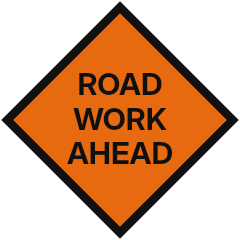
10. How should speed and following distance be adjusted beyond this sign?
Show answer
Answer D: Cut speed and leave a longer gap, because traffic can stop without warning
Traffic in these areas stops and starts unexpectedly and there is little room to steer around a problem, so extra space is what prevents a rear-end collision.
-
11. You are traveling beside another vehicle on a multilane highway at nearly the same speed. Why is this a poor position?
Show answer
Answer B: You may be sitting in that driver's blind spot with nowhere to go if they move over
Driving alongside removes your side escape route and often puts you where the other driver cannot see you. Speed up or drop back to open space beside you.
-
12. You want to turn left across the oncoming lane into a shopping center driveway. Who must you yield to?
Show answer
Answer B: Oncoming traffic and anyone using the sidewalk
A left turn into a driveway crosses both the oncoming lane and the sidewalk, so you give way to traffic and to pedestrians before completing it.
-
13. The light ahead is green, but traffic beyond the intersection is backed up so far that you could not clear it. What is the correct action?
Show answer
Answer D: Wait behind the stop line until there is room on the far side
Entering an intersection you cannot clear blocks cross traffic and pedestrians, so you should hold your position until space opens on the other side.
-
14. Where should a rider keep the knees while riding?
Show answer
Answer B: Against the fuel tank
Knees held against the tank anchor the rider to the motorcycle and improve balance, which matters most in turns.
-
15. You reach a stop-controlled intersection at the same time as a driver on your left, but that driver is already moving through the crossing. Who goes first?
Show answer
Answer C: The driver who is already inside the intersection
A vehicle already in the intersection has the right of way, and the rule about yielding to the right applies only before anyone has entered.
-
16. What does a yellow painted curb mean in California?
Show answer
Answer A: Stop only to load or unload passengers or freight for the posted time
A yellow curb is for loading and unloading passengers and freight, no longer than the posted time, and drivers of noncommercial vehicles usually must stay with the vehicle.
-
17. How should a group merge onto a busy highway from an entrance ramp?
Show answer
Answer D: One rider at a time into gaps in traffic, re-forming once all are on
Each rider needs a gap and enough speed of their own, so the group merges individually and only takes up the staggered formation again afterward.
-
18. Where should a rider in the middle of a group direct their attention?
Show answer
Answer A: Well ahead through the group and around it, not just at the rider in front
Watching only the machine ahead hides the traffic and hazards further up the road, and it leaves the rider reacting late to everything the group meets.
-
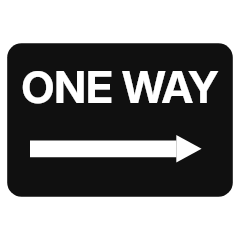
19. A driver disregards this sign and turns so as to travel against the direction it establishes. What is the immediate danger?
Show answer
Answer D: The driver will face traffic head on, because every lane comes the other way
Turning against the established direction puts the vehicle nose to nose with all the traffic on that street, which is why the mistake has to be corrected at once.
-
20. You are about to pass a large truck on a two-lane highway. Which practice is correct?
Show answer
Answer A: Finish the pass without delay and expect wind turbulence beside the truck
Lingering beside a truck keeps you in its blind spot and exposes you to air turbulence. Pass on the left, keep moving, and move back only when you can see the whole truck in your mirror.
-
21. What most often leads to an engine seizure on a motorcycle?
Show answer
Answer A: Loss of engine oil or coolant, so the moving parts overheat and grip
Seizure is normally a lubrication or cooling failure, which is why oil level and coolant are part of every pre-ride check and why a rising temperature reading deserves attention.
-
22. Who takes on financial responsibility for a California driver under 18?
Show answer
Answer A: The parents or guardians who signed for the license
Parents or guardians take on financial responsibility for drivers younger than 18 and pay for damages if the driver is in a collision.
-
23. Why should a rider downshift one gear at a time instead of skipping several at once?
Show answer
Answer D: Skipping gears can lock the rear wheel through sudden engine braking
Dropping several gears at once forces engine speed far above what road speed supports, and the rear tire can be dragged into a skid when the clutch comes out.
-
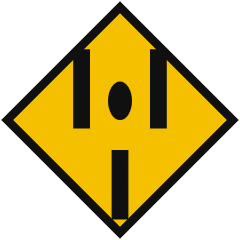
24. What must a driver be ready for beyond this sign?
Show answer
Answer C: Vehicles approaching from the opposite direction in the next lane over
The separation between the two directions runs out, so from that point oncoming vehicles share the same pavement and the driver has to keep right.
-
25. You are overtaking in a short passing lane on a two-lane road and it is about to end. What must you do?
Show answer
Answer A: Finish the pass and move back to the right before it ends
The added lane ends and the traffic returns to a single lane in each direction, so the pass has to be complete before the pavement runs out.